

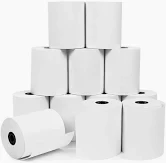


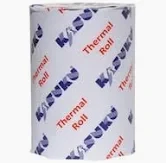



A thermal roll is a type of paper used in thermal printers, which are commonly found in receipt printers, barcode printers, and even some label printers. The paper is coated with a heat-sensitive material that reacts to heat, producing text or images without the need for ink or toner.
Key Features:
-
Heat-Sensitive Coating: The paper is treated with a special chemical coating that turns black when exposed to heat. The printer’s thermal print head generates heat in specific areas to create the print, which appears as text or images.
-
No Ink or Ribbon: Unlike traditional printers, thermal printers don't require ink or toner cartridges. This makes them cost-effective and low-maintenance since there's no need to replace ink or ribbons.
-
Quiet Operation: Because thermal printers use heat instead of impact (like dot matrix printers), they tend to be quieter during operation.
-
Durability: Thermal prints are generally more durable than inkjet prints, but they can be susceptible to fading over time, especially when exposed to heat, light, or chemicals. That's why some thermal receipts may fade if left in a wallet for too long.
-
Applications: Thermal rolls are typically used for:
-
Receipts: Common in retail, restaurants, and other service industries.
-
Labels and Barcodes: Often used in logistics, shipping, and inventory management.
-
Tickets: For events, parking, or public transport.
-
-
Sizes: Thermal rolls come in various widths, diameters, and lengths to fit different types of printers and business needs.
Thermal printing is known for being fast, efficient, and reliable, which is why it’s so commonly used in environments like stores, kiosks, and other places where quick, high-volume printing is needed.
Does that cover what you were looking for? Or did you want to dive deeper into any specific aspect of thermal rolls?